Wednesday, August 19, 2015

Beading: A Hobby That Gives You a Feeling of Accomplishment and Satisfaction

Does your eye for fashion extend beyond the selection at your local shopping mall? Do jewelry counters ignite your imagination? If so, beading is the perfect craft for you. It is always better to have a hobby to take your mind off a stressful situation, to have some peace of mind, to relax, to enjoy and to learn. You can do so by choosing a hobby that you find interesting. Some may love painting, some love gardening, and some are passionate about movies. If you are looking to engage yourself in a new hobby, you could try beading which could be both exciting and satisfying as it gives you a sense of accomplishment. This is because creating any kind of objects on your own makes you feel proud of yourselves

The most popular item to make with beads is jewelry. Beginners usually start out with large plastic type beads and make bracelets and necklaces with them. Then, as they proceed with this hobby, they will use smaller beads. It is not difficult to find dozens of books about beading at your local book stores (such as Popular & Kinokuniya if you were staying in Kuala Lumpur) with different designs and patterns that could give you some ideas of how to proceed with your jewelry projects. For beading purposes, I strongly recommend two of my favourite books, namely "Aspiring Artist's Studio: Beaded Jewelry Design" by Tair Parnes and "Beading with Charms" by Katherine Duncan Aimone.


In Tair Parnes' "Aspiring Artist's Studio: Beaded Jewelry Design", the easiest projects are found in the first four sections and include detailed instructions and photographs of key steps. This book takes you on a colourful journey into a world of infinite artistic possibilities. Artist and author Tair Parnes guides you through 23 projects, clearly described with step-by-step instructions and accompanies by vibrant colour photos . Every earring, necklace, brooch, and bracelet is like a little exhibition of contemporary art plucked from her studio.

"Beading with Charms" by Katherine Duncan Aimone.- The gorgeous pieces featured in this book probably have you eager to start playing with your tools and bead stash. Whether you use the designs as launching points for your own creations or want to achieve the exact same results, you will find this book very useful. If you do not wish to spend money on these books, the Internet can provide a vast resource of free information for your beading projects.

Beading is a hobby many people enjoy and there are many different varieties of beads that you can use to make necklaces, bracelets, earrings, and even watches. Whether you are making a necklace, bracelet, or a watch, the method is the same
. Once you have threaded all your beads onto the thread, you will need to tie a tight knot at the end. Cut the loose ends of the knot as close as you can. The knot will pull up into one of the beads. Believe me, once you learn the basics of beading, you will find this hobby very interesting and absorbing. I have been dabbling in this hobby for years and have created lots of artificial jewelry items. One of the greatest things about creating your own jewelry is that you can fashion it to suit any style or wardrobe. Another advantage is that the beading process is rhythmic, soothing and relaxing. Below are pictures of some my creations. I hope my readers would enjoy seeing them.

Beads come in a multitude of shapes, styles and colours. They may be plain or fancy, large or small, glass or wood. If you can drill a hole in it, you can make a bead out of it. The possibilities are endless.


 I don't fancy luxurious watches as I am proud of the watches that I made myself. The same goes for necklaces too. I feel happier wearing jewelleries that I make myself as they are cheaper and safer too! After being robbed of my gold chain and pendant, I am left without a choice but to start a new hobby i.e. beading.


Monday, August 3, 2015

Tai Keun Ying: His Contributions to the Malay Language

The Malay language is a member of the Austronesian language family - one of the world’s largest languages in the world with more than 1,200 distinct languages found from Madagascar to Hawaii. The Austronesian family can be further split into two primary groups, namely, the Central-Eastern and Western groups. Malay is a member of this Western branch, along with Indonesian, Javanese and Filipino. Many linguists believe that the Malay language has the most significant political impact throughout the history of all Austronesian languages. It is historically one of the most politically powerful languages of the enormous Austronesian language family and has served as a common language throughout Indonesia, Malaysia, Sumatra, and Borneo for centuries. In fact, the history Malay language is divided into four historical periods, namely Old Malay, Early Modern Malay, Late Modern Malay, and Contemporary Malay.


Old Malay (682-1500)
Also known as Bahasa Melayu Kuno it was written in the ancient writings of Rencong, Pallava, and Kawi. Even the Jawi script during this period was used extensively with Sanskrit.

 
Early Modern Malay (1500 - 1850)
The prominence of Malacca which embraced Islamic faith turned Malay into a language used in the spread of the Islamic religion. During this period of history, Malay underwent many radical changes with the:
a. infusion of Arabic, Persian and Hindi Vocabulary
b. introduction of Arabic rhetorical style.
c. changes in grammar based on oral speech.


Late Modern Malay (1850 - 1957)
The 17th century also saw the emergence of the great Hikayats as the Malays recorded their experiences, religious laws and oral literature in Jawi script. Sir Richard O. Winstedt categorized the hikayat as Bahasa Melayu Klasik (Classical Malay Language). The late Modern Malay language also involves the incorporation of loan words from Portuguese, Dutch and English.

Contemporary Malay (1957 - the present)
In 1959, Indonesia and Malaysia signed an agreement to standardize the spelling system of both countries. They named this unified system "Melindo", an acronym for Bahasa Melayu and Bahasa Indonesia. However, the Melindo spelling was never executed as a consequence Indonesia's confrontation against Malaysia. As the relationship between these two countries stabilized in 1966, further steps towards the standardization of a common spelling system was implemented in 1972. Some of the changes affecting the Malaysian language are as indicated below:
"ch" is spelled as "c"
e.g. cari instead of chari
cerita instead of cherita
pakcik instead of pakchik
pecut instead of pechut

"sh" is spelled as "sy"
e.g. syarikat instead of sharikat
syurga instead of shurga
syariah instead if shariah

The written form of words like "bermain2" has since been written in full "bermain-main" and  is now being remembered as part of the history of the Malay language. To be very frank, I would rather write the duplicated form of bermain-main as bermain2 as it saves time and energy! For the sake of young Malaysians, who have no idea how the old Malay spelling was like, I have uploaded pages from a book written by my father prior to 1972 entitled "How to Read Malay Newspaper" (Volume 1) so that you can see how much Bahasa Malaysia has changed since then. I was clearing my things when I accidentally found this book. 

For a long time, I wanted to write an article about this book in commemoration of my father so that his contributions to the Malay language will not be forgotten but did not find the time to do so until today. In fact, according to my relatives, he has written several books about the Malay language but this is the only one that I could find so far. I do not want this book to disappear into nothingness because it does exist and has had its days of glory. Further, my father had spent a lot of time writing his books and it is only fair to let the world know that his books exist. At the moment, this is the only thing I can do for him. It is hope that with the publication of this article, his contributions to the Malay language will always be remembered. 


My father knows many languages. In fact, I learnt Jawi from him when I was 8 years old. He is not the kind of father who would easily let his children go if they fail their exams. When I failed my Jawi (in standard 2), apart from caning me, he drew a chart with all the Jawi letters on it and made me memorize them. He also taught me to write words and later on sentences in Jawi. 


A photo of my father - Tai Keun Ying


My father and his colleagues at SJK(C) Chung Kwo.


My father was formerly a teacher at SJK(C) Chung Kwo


My father and his students


My father and his best friend - the one who inspired him to write Malay books 


My father and his best friend - the one who inspired him to write Malay books


Monday, July 13, 2015

A Photo Tour of Institut Pendidikan Guru Kampus Tengku Ampuan Afzan


Upon my arrival at IPG Kampus Tengku Ampuan Afzan, I was curious to explore this new place and as I was walking around the institute, I managed to take some photos for this blog post. The photography tour in this blog post takes you to some of the most scenic parts of Institut Pendidikan Guru Kampus Tengku Ampuan Afzan (Institute of Teacher Education Tengku Ampuan Afzan Campus). Above are two photos of the main / administration block of the campus.

This is what you see on the left of the main / administration block.

To the right of the main / administration block.

The hanging bridge opposite the main / administration block leading to the boys' hostel.

A view of the main / administration block from the boys' hostel.

The Boys' Hostel - Blok Nuri

The picturesque hanging bridge of IPG Kampus Tengku Ampuan Afzan

Going further into the main / administration block, this is where our lecture rooms are located.


Lecture rooms to the left of the above (red) staircase.

Lecture rooms to the right of the above (red) staircase.

Our scenic sports complex - Astaka Khalid Al-Walid (opposite the boys' hostel)

An interior view of Astaka Khalid Al-Walid

Annual Sports Day 2015

Annual Sports Day 2015

Annual Sports Day 2015

Food Fair on Sports Day (2015)

Food Fair on Sports Day (2015)

The Girls' Hostel - photograph taken from the hanging bridge.

The Centre for Early Childhood Education

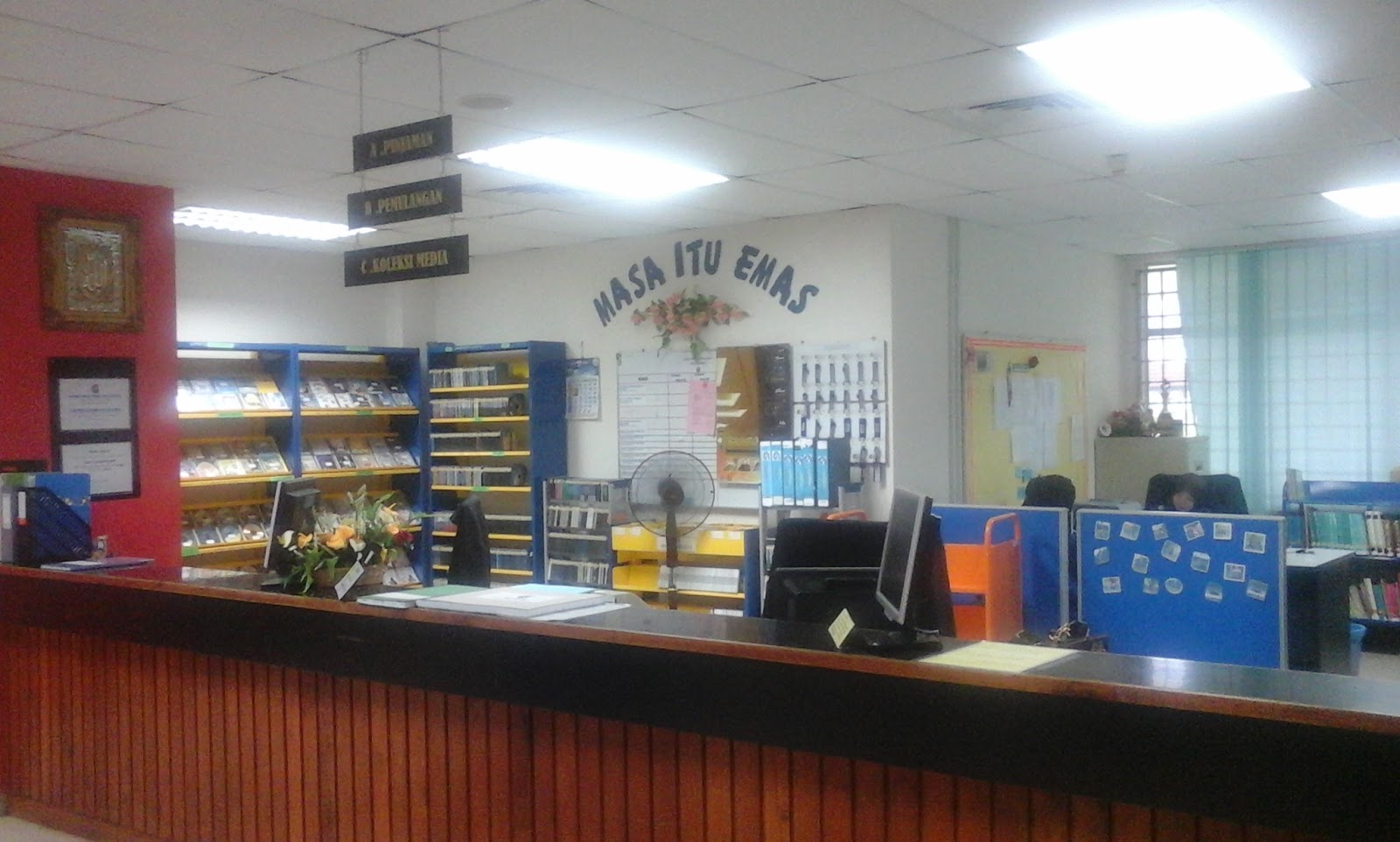
The library of IPG Kampus Tengku Ampuan Afzan (Pusat Sumber Al-Kindi).

A reading program and workshop organized by Pusat Sumber Al-Kindi

The Campus Library is open five days a week offering the trainee teachers the opportunity to borrow a wide range of materials.

Inside the campus library

The library is proactive in developing a wide range of resources and guiding the use of these resources

A view of the library

The core collection covers materials that meet the taught courses offered by the institute with generous allocations in developing resources required for research purposes.

Spacious comfortable library

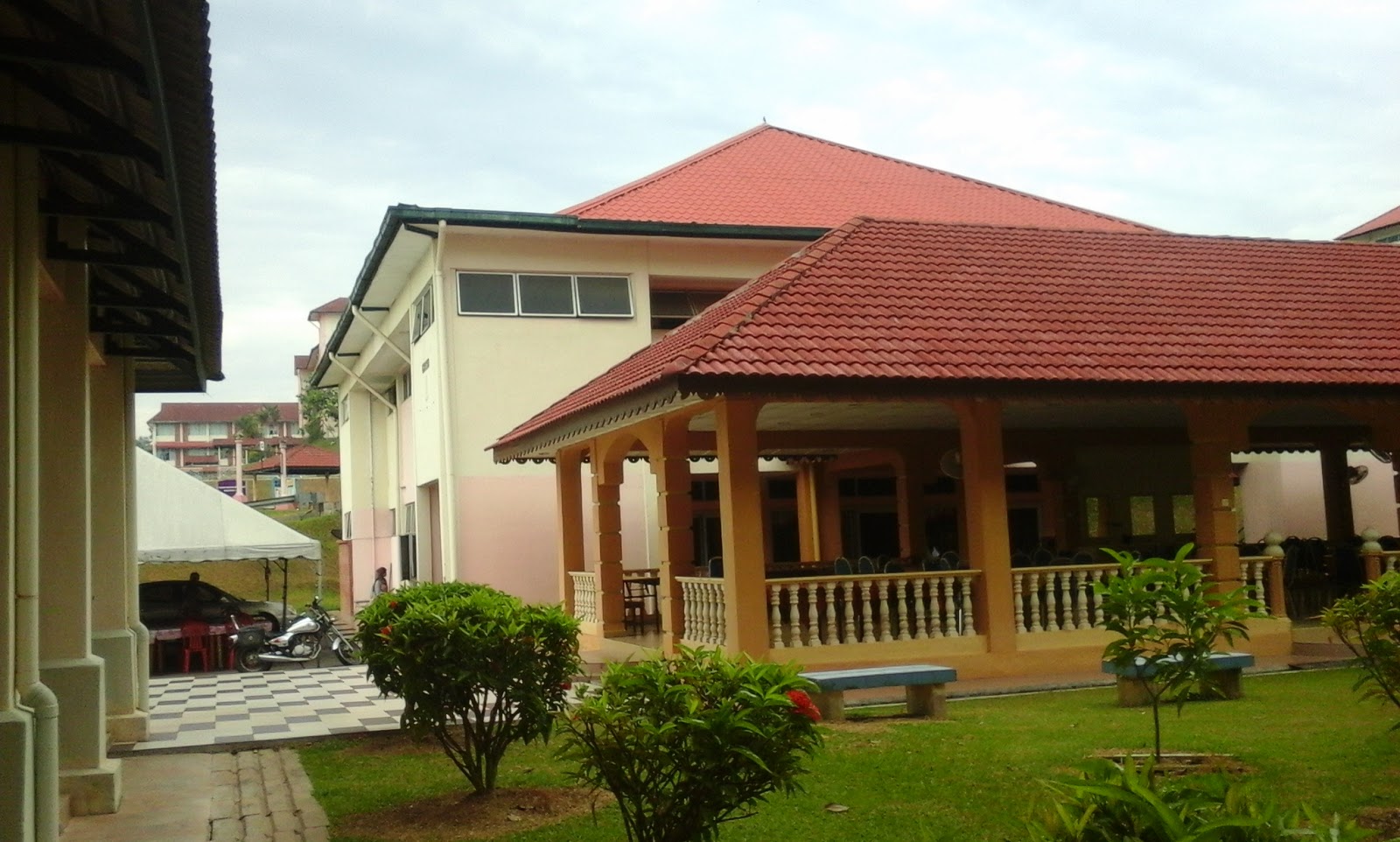
The Campus Hall - Dewan Darul Makmur

Inside the Campus Hall - Dewan Darul Makmur

A view inside the Campus Hall

A view inside the Campus Hall

Koperasi IPG Kampus Tengku Ampuan Afzan - the nearest shopping centre for the trainee teachers

Koperasi IPG Kampus Tengku Ampuan Afzan - an ideal shopping paradise


Café Sayyidah Khadijah


                          ( Photographed by Tai Soo Shong)

Thursday, July 2, 2015

The French Future Tense


 Above are pictures of my French Collection


In French, the future tenses include the simple future (le futur simple), the future perfect (le futur anterieur) and the near future (le futur proche). According to Eliane Kurbegov (French Grammar Drills, 2007:179), "The near future is used to talk about what is going to happen. Similarly the simple future talks about what will happen. Both tenses refer to future events. However, the near future is more frequently used in familiar conversation while the simple future is more formal. The future perfect, found less frequently in familiar conversation, is used to say that something will be done by the time something else happens."

The Simple Future (le futur simple)
The simple future expresses an action or a state that will take place after we speak. As the action or state has not happened yet, it is only more or less probable. To distinguish the simple future from the near future, let's say the near future expresses a fact that will take place more probably than the simple future (Jean Severy, Essential French Grammar, 2008:174).

In English, the simple future consists of will or shall + verb. In French, the simple future has no auxiliary, it consists of one word only. The future stem of regular -er and -ir verbs is the entire infinitive. Regular -re verbs drop the final -e of the infinitive before adding on the endings. The future endings are -ai, -as, -a, -ons, -ez, -ont. For example:

travailler (to work)
je travaillerai (I will work), tu travailleras, il/elle/on travaillera, nous travaillerons, vous travaillerez, ils/elles travailleront

finir (to finish)
je finirai (I will finish), tu finiras, il/elle/on finira, nous finirons, vous finirez, ils/elles finiront

perdre (to lose)
je perdrai (I will lose), tu perdras, il/elle/on perdra, nous perdrons, vous perdrez, ils/elles perdront

Where the irregular verbs are concerned, many have regular stems, that is, the entire infinitive or (with -re ending verbs) the infinitive minus final -e. For example:

boire (to drink) ------ je boirai
croire (to believe) ------ je croirai
dormir (to sleep) ------ je dormirai
lire (to read) ------ je lirai
ouvrir (to open) ------ j'ouvrirai
partir (to leave) ------ je partirai

However, there are also irregular verbs with irregular stems:

aller (to go) ------ j'irai
envoyer (to send) ------ j'enverrai
falloir (to be necessary) ------ il faudra
recevoir (to receive) ------ je recevrai
venir (to come) ------ je viendrai
vouloir (to want) ------ je voudrai

The Future Perfect (le futur anterieur)
Whereas the simple future describes an action or situation which will be taking place at some time in the future, the future perfect refers to an action which is seen as completed by or at a specific time in the future. In English, the future perfect consists of will have or shall have + past participle. In French, the future perfect consists of the simple future of avoir or etre + past participle. For example:

aller (to go)
je serai alle(e), (I will have gone), tu seras alle(e), il/on sera alle, elle sera allee, nous serons alle(e)s, vous serez alle(e)(s), ils seront alles, elles seront allees

devenir (to become)
je serai devenu(e), (I'll have become), tu seras devenu(e), il/elle/on sera devenu(e), nous serons devenu(e)s, vous serez devenu(e)(s), ils/elles seront devenu(e)s

It should be noted that the past participle of verbs conjugated with etre should agree in gender and number with the subject.

The Near Future
The futur proche implies the action will be completed soon, while the simple future is open-ended as to completion of the action. Thus, if you ask for a book at the library desk, the librarian's response would normally be in the futur proche as follows: Je vais chercher votre livre (I'll get your book). Were the librarian to respond with the simple future tense, Je chercherai votre livre, you would be left wondering how long you might have to wait.

In English, the near future consists of to be going to + infinitive. In French, the near future consists of the present tense of aller + infinitive. For example:

Je vais essayer (I am going to try)
Il va faire froid dehors (It's going to be cold outside).

Wednesday, July 1, 2015

French Grammar: Past Tense Verbs

In French, the past tense include the passe compose, the imperfect tense, the pluperfect tense and the passe simple.

The Formation of the Passe Compose
The passe compose is generally translated into English by the simple past (I lived, she wrote), the present perfect (I have lived, she has written) and the emphatic past (I did live, she did write). The passe compose is used when one knows how long a past action lasted, how many times it occurred, and at what precise moment it happened.

Like the English present perfect, the passe compose is a compound tense. It consists of an auxiliary and the past participle of the verb in question. In English, the auxiliary is always the verb 'to have'. In French, it can be either avoir or etre. Most French use avoir to build the passe compose. The second element of the passe compose is the past participle.

The past participle of regular verbs can be formed in the following ways. With -er verbs, the -er ending is dropped and is replaced with -e: (parler - parle)
j'ai parle (I spoke, I have spoken, I did speak), tu as parle, il/elle/on a parle, nous avons parle, vous avez parle, ils/elles ont parle.

With -ir verbs, the -ir ending is dropped and is replaced with -i: (finir - fini)
j'ai fini (I finished, I have finished, I did finish), tu as fini, il/elle/on a fini, nous avons fini, vous avez fini, ils/elles ont fini.

With -re verbs the -re ending is dropped and is replaced with -u: (repondre -repondu)
j'ai repondu (I answered, I have answered, I did answer), tu as repondu, il/elle/on a repondu, nous avons repondu, vous avez repondu, ils/elles ont repondu.

Irregular verbs, however, have irregular past participles which must be memorized. Below is a list of some of these verbs.

Infinitive ----------------English Meaning --------------Past Participle
avoir -------------------------to have --------------------------eu
boire------------------------- to drink -------------------------bu
construire --------------------to build ---------------------construit
connaitre ---------------------to know ----------------------connu
disparaitre -----------------to disappear -------------------disparu
faire ------------------------ to make, do ---------------------fait
lire ---------------------------- to read -------------------------lu
ouvrir -------------------------to open -----------------------ouvert
apprendre --------------------to learn -----------------------appris

The past participle using avoir to form the passe compose may change under certain circumstances. It should be noted that the past participle of verbs using avoir as auxiliary to form the passe compose agrees in gender and number with a preceding direct object. If the object is feminine singular, -e is added to the past participle, if it is masculine plural, -s is added (except when the participle ends in -s): if it is feminine plural, -es is added. For example:
  1. Quels livres avez-vous lus? (Which books did you read?)
  2. Il nous a reconnus. (He recognized us)
  3. Quelle imprimante ont-ils achetee? (Which printer did they buy?)
  4. Quelle chance elle a eue! (How lucky she was!)
  5. Combien de photos avez-vous prises? (How many pictures did you take?)
  6. La lettre que j'ai ecrite est longue. (The letter that I wrote is long)
However, the past participle remains unchanged if there is no preceding direct object, if the direct object follows the past participle eg Elle a vu la generale (She saw the dress rehearsal) or if the preceding object is indirect eg Ils leur ont repondu (They answered them).
A small number of French verbs form the passe compose with etre rather than avoir. Most of these express motion or a change of state. If the past participle of verbs is conjugated with etre, they must agree in gender and number with the subject. If the subject is feminine singular, -e is added to the past participle, if the subject is masculine plural, -s is added, and if the subject is feminie plural, -es is added. Here is a model conjugation:
aller (to go):je suis alle(e), tu es alle(e), il est alle, elle est allee, nous sommes alle(e)s, vous etes alle(e)s, ils sont alles, elle sont allees.
To form the passe compose correctly, it is necessary to choose the correct form of the auxiliary verb as well as the correct form of the past participle.

The Imperfect Tense
The imperfect tense expresses actions and situations that lasted an indeterminate amount of time (he had a lot of money), occurred an unspecified number of times (she went to church every Sunday), or were in progress often when something else happened (it was raining when they arrived).
The stem of the imperfect tense of all verbs (except etre) is found by dropping the -ons ending of the nous form of the present tense. The imperfect endings are -ais, ais, -ait, -ions, -iez, -aient. For instance, here is the conjugation of the regular verb, parler, in the imperfect tense:
parler (to speak)(nous parlons)
je parlais (I spoke, I was speaking, I used to speak)
tu parlais (you spoke, you were speaking, you used to speak)
il/elle/on parlait (he/she/one spoke/was speaking/used to speak)
nous parlions (we spoke, we were speaking, we used to speak)
vous parliez (you spoke, you were speaking, you used to speak)
ils/elles parlaient (they spoke, they were speaking, they used to speak)


Below is the conjugation of the irregular verbs boire, craindre and dormir:

Infinitive --------- Nous Form of Present Tense ----------- Imperfect
boire (to drink) ----------- nous buvons -------------------- je buyais
craindre (to fear) ---------nous craignons ------------------je craignais
dormir (to sleep) ----------nous dormons ------------------ je dormais

It should be noted that "It is in distinguishing between passe compose (used to represent finished actions) vs imperfect (used to describe actions that were going on in the past) that speakers of English have the most trouble (Didier Bertrand, Test Yourself French Grammar 1996:42).

The Pluperfect Tense
The pluperfect (also called the past perfect) is a compound tense consisting of an auxiliary and the past participle. In French as in English, the pluperfect describes what had happened before another action in the past. In the formation of the pluperfect, the imperfect tense of the auxiliary (avoir or etre) is added to the past participle of the verb in question. For instance here is the conjugation of the regular verb partir in the pluperfect tense.

partir (to leave)
j'etais parti(e) --------------- I had left
tu etais parti(e) --------------you had left
il/on etait parti -------------- he/it/one had left
elle etait partie -------------- she/it had left
nous etions parti(e)s --------- we had left
vous etiez parti(e)s ---------- you had left
ils etaient partis ------------- they had left
elles etaient parties ---------- they had left

The Passe Simple
The passe simple is often called the literary or historical past and it replaces the passe compose in formal speeches and writing. The passe simple is not used in conversations or everyday writing but one can see its usage in very formal speeches, newspaper articles, historical texts, and French Literature.

The passe simple of regular -er ending verbs is formed by adding the endings -ai, -as, -a, -ames, -ates, -erent to the stem of the infinitive. For instance:

donner (to give)
je donnai (I gave)
tu donnas (you gave)
il/elle/on donna (he/she/it/one gave)
nous donnames (we gave)
vous donnates (you gave)
ils/elles donnerent (they gave)

The passe simple of both -ir and -re ending verbs is formed by adding the endings -is, -is, -it, -imes, -ites, -irent to the stem of the infinitive. Eg:

choisir (to choose)
je choisis (I chose), tu choisis (you chose), il/elle/on choisit (he/she/it/one chose), nous choisimes (we chose), vous choisites (you chose), ils/elles choisirent (they chose).

entendre (to hear)
j'entendis (I heard), tu entendis (you heard), il/elle/on entendit (he/she/it/one heard), nous entendimes (we heard), vous entendites (you heard), ils/elles entendirent (they heard).

For -cer ending verbs a cedille is added to the c before a (except the third person plural)

For -ger ending verbs, e is added after g before a (except the third person plural). Eg:

manger (to eat)
je mangeai (I ate), tu mangeas. il/elle/on mangea, nous mangeames, vous mangeates, ils/elles mangerent.

Where irregular verbs are concerned some take the ending -is, -is, -it, -imes, -ites, -irent whilst others take the endings -us, -us, -ut, -umes, -utes, -urent.

The passe simple of irregular verbs can be derived from their past participle. If the past participle of the verb ends in -i, -is, or -it, the first series of the above endings would be used to form its passe simple. If the past participle of the verb ends in -u, then the second series of endings would be used instead. Eg:

dire (to say)
past participle: dit
je dis, tu dis, il/elle/on dit, nous dimes, vous dites, ils/elles dirent

courir (to run)
past participle: couru
je courus, tu courus, il/elle/on courut, nous courumes, vous courutes, ils/elles coururent

However, it should be noted that the passe simple of certain irregular verbs cannot be derived from their past participle. Eg:

ecrire (to write)
past participle: ecrit
j'ecrivis, tu ecrivis, il/elle/on ecrivit, nous ecrivimes, vous ecrivites, ils/elles ecrivirent

venir (to come)
past participle: venu
je vins, tu vins, il/elle/on vint, nous vinmes, vous vintes, ils/elles vinrent

How can we identify the passe simple? According to Trudie Maria Booth (French Verb Tenses, 2008:147), "If one is familiar with the endings, the verbs in the passe simple are easy to identify, even if the forms are not derived from the past participle. It is evident for example, that mourut comes from mourir and ouvrit comes from ouvrir. Only a few verbs may be difficult to recognize and should therefore be memorized."